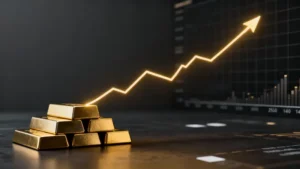
Recent market signals have sparked a significant divergence in opinion regarding the future of gold, with institutional sentiment increasingly pointing towards a sustained bull run. External data reveals that a potential surge to $5,000 per ounce is becoming a central focus for major investors, driven by a confluence of macroeconomic and geopolitical factors. This article provides a deep analysis of the gold price forecast next 5 years, dissecting the key drivers behind this bullish outlook, the potential roadblocks, and the strategic considerations for investors looking toward 2026. We will explore the unprecedented trend of central bank gold buying and evaluate how Federal Reserve policy will shape the precious metal’s trajectory.
The Current Market Landscape: Setting the Stage for a Multi-Year Rally and its long-term potential
The global financial markets are at a pivotal juncture. Persistent inflation, coupled with growing concerns over sovereign debt and geopolitical instability, has amplified the search for reliable stores of value. In this environment, gold is reasserting its traditional role as a safe-haven asset, attracting a fresh wave of interest not just from retail investors, but from the world’s largest financial institutions.
💡 The Catalyst: Record Highs and Bullish Forecasts from Major Institutions
A recent survey conducted by Goldman Sachs across more than 900 of its institutional investor clients has sent a clear signal to the market. A significant 36% of respondents believe gold will reach an unprecedented $5,000 per ounce by the end of 2026. Furthermore, another 33% anticipate a price range between $4,500 and $5,000. In total, over 70% of these influential market participants hold a bullish view on gold’s performance into 2026. This overwhelming optimism from sophisticated investors suggests a fundamental belief that the current economic climate is uniquely favorable for the precious metal’s appreciation.
💡 The Connection: Why Market Volatility is Driving a Renewed Focus on Gold’s Long-Term Value
The renewed focus on gold is not merely speculative. It is a direct response to mounting systemic risks. Investors are increasingly seeking assets that are not tied to any single government’s fiscal or monetary policy. Gold’s high liquidity, lack of counterparty risk, and its historical performance during times of economic stress make it a prime candidate for portfolio diversification. As volatility in equity and bond markets continues, gold’s role shifts from a peripheral asset to a core holding for capital preservation and long-term growth.
Price Trend Analysis: Short-Term Headwinds vs. Mid-Term Momentum in the Gold Price Prediction 2026
While the long-term outlook appears bright, investors must navigate a complex interplay of short-term pressures and powerful mid-term tailwinds. The path to $5,000 will likely be characterized by periods of consolidation and volatility, influenced heavily by central bank communications and key economic data releases.
💡 Short-Term Drivers: Navigating Inflation Data and Federal Reserve Rate Signals
In the immediate term, the gold price remains highly sensitive to inflation data and the resulting policy signals from the U.S. Federal Reserve. A higher-than-expected inflation report could bolster gold’s appeal as an inflation hedge. Conversely, signs of a more aggressive (hawkish) Fed stance on interest rates could strengthen the U.S. dollar and government bonds, creating headwinds for non-yielding assets like gold. Traders and investors will be closely monitoring FOMC meeting minutes and statements for clues about the timing and pace of any future monetary policy adjustments. A key part of navigating this is understanding how to approach investing in gold CFD, which allows for speculation on both rising and falling prices.
💡 Mid-Term Outlook (2025-2026): The Structural Shift in Global Demand
Looking towards 2025 and 2026, the narrative is dominated by a structural shift in global demand. This shift is primarily led by central banks, which have been accumulating gold at a historic pace. This trend, often linked to a broader strategy of de-dollarization, involves diversifying national reserves away from the U.S. dollar. According to recent World Gold Council surveys, a vast majority of central banks intend to continue or increase their gold purchases, providing a strong and consistent source of demand that is less sensitive to short-term price fluctuations.
💡 Market Sentiment: Analyzing Investor Positioning and Cross-Asset Correlations (USD, Bonds)
Market sentiment can be gauged by observing gold’s relationship with other major asset classes. A weakening U.S. Dollar Index (DXY) is typically bullish for gold, as it makes the dollar-denominated commodity cheaper for foreign buyers. Similarly, falling yields on U.S. Treasury bonds reduce the opportunity cost of holding gold. Investor positioning in gold ETFs and futures markets also provides valuable insight. A sustained increase in ETF holdings indicates strong long-term investor conviction, which supports a stable price floor.
Macroeconomic & Policy Deep Dive: The Forces Shaping Gold’s Future
The long-term gold forecast next 5 years is not built on technical trends alone. It is deeply rooted in fundamental macroeconomic shifts and evolving global policies that are altering the financial landscape.
💡 The Role of Central Banks: A Historic Gold Buying Spree and Its Implications
As highlighted by the Goldman Sachs survey, where 38% of respondents identified it as the primary price driver, the ongoing central bank buying spree cannot be overstated. Nations are strategically increasing their gold reserves to hedge against geopolitical risks, reduce reliance on the U.S. dollar, and bolster the stability of their own currencies. This consistent, large-scale buying provides a powerful tailwind for the gold price, creating a demand dynamic that is independent of traditional investment flows. This is a multi-year trend that is expected to continue through 2026 and beyond, providing a solid foundation for the bullish price forecast.
💡 Global Economic Factors: Geopolitical Risk, De-Dollarization Trends, and Sovereign Debt Concerns
The world is facing a complex web of interconnected economic challenges. Heightened geopolitical tensions in various regions are driving safe-haven demand. The de-dollarization trend is gaining momentum as countries seek alternatives to the U.S. dollar for international trade and reserves. Finally, ballooning sovereign debt levels in major Western economies are raising serious questions about long-term fiscal sustainability. In such a scenario, gold, as a neutral reserve asset with no sovereign risk, becomes an increasingly attractive component of any diversified portfolio. Platforms like Ultima Markets MT5 offer advanced tools for traders looking to capitalize on these macro trends.
Potential Risks and Opportunities on the Horizon for Gold investors
A comprehensive forecast requires a balanced assessment of both potential risks that could challenge the bullish thesis and the upside catalysts that could accelerate the rally. Understanding this dynamic is crucial for strategic positioning.
| Factor Type | Description | Potential Impact on Gold Price |
|---|---|---|
| Downside Risk | A more hawkish U.S. Federal Reserve that maintains or increases interest rates unexpectedly. | Negative 🔻 |
| Downside Risk | Significant de-escalation of global geopolitical tensions and reduced uncertainty. | Negative 🔻 |
| Downside Risk | An unexpectedly strong and sustained rally in the U.S. Dollar. | Negative 🔻 |
| Upside Catalyst | A Fed ‘pivot’ towards earlier and faster interest rate cuts. | Positive 🔼 |
| Upside Catalyst | Escalation of geopolitical conflicts or a new sovereign debt crisis. | Positive 🔼 |
| Upside Catalyst | Continued or accelerated pace of central bank gold purchasing. | Positive 🔼 |
💡 Downside Risks: A More Hawkish Fed, Easing Geopolitical Tensions, or an Unexpectedly Strong Dollar
Investors should not ignore potential headwinds. If inflation proves more stubborn than anticipated, the Federal Reserve might be forced to maintain a restrictive monetary policy for longer, which would support the dollar and weigh on gold. A sudden and lasting resolution to major geopolitical conflicts could also reduce gold’s appeal as a safe-haven asset. It is crucial for investors to prioritize capital protection by working with brokers that emphasize fund safety and robust risk management protocols.
💡 Upside Catalysts: The Key Factors That Could Push Gold Past $5,000
The path to $5,000 could be accelerated by several key catalysts. The most significant would be a clear ‘pivot’ from the Federal Reserve towards a cycle of interest rate cuts, which would weaken the dollar and propel gold higher. An escalation of geopolitical tensions or the emergence of a sovereign debt crisis in a major economy would also likely trigger a flight to safety, with gold as the primary beneficiary. Finally, if central banks continue their aggressive purchasing, it could create a supply-demand imbalance that forces prices significantly higher.
In conclusion, the gold price forecast next 5 years is underpinned by a powerful convergence of institutional bullishness, structural demand from central banks, and a precarious global economic backdrop. While short-term volatility is a given, the long-term drivers strongly suggest that gold will continue to play a crucial role in investment portfolios. The path to the $5,000 per ounce target by 2026, as forecasted by a significant portion of institutional investors, appears increasingly plausible as long as these fundamental trends remain intact. Investors should remain vigilant, balancing the significant opportunities with a clear-eyed view of the potential risks on the horizon.
FAQ
1. What is a realistic gold price prediction for 2026?
Based on significant institutional sentiment, such as the Goldman Sachs survey, a price target in the range of $4,500 to $5,000 per ounce is considered a realistic possibility by the end of 2026. However, this outcome is contingent on key factors such as a dovish shift in Federal Reserve policy, continued strong central bank buying, and persistent geopolitical and economic uncertainty.
2. How will the Federal Reserve’s interest rate decisions impact gold’s price over the next 5 years?
The Federal Reserve’s decisions will be one of the most critical factors. A policy of lowering interest rates typically weakens the U.S. dollar and reduces the yield on bonds, which is highly bullish for gold as it lowers the opportunity cost of holding the non-yielding metal. Conversely, a period of sustained high interest rates would act as a significant headwind for gold’s price appreciation.
3. Is gold a good investment to hedge against inflation and recession risk through 2026?
Historically, gold has been considered a reliable hedge against both inflation and recession. It tends to preserve its value when fiat currencies lose purchasing power due to inflation. During recessions, its safe-haven status often attracts capital, causing its price to rise while other assets like stocks may fall. Given the current global economic uncertainties, many analysts believe it remains a prudent tool for portfolio diversification and risk management through 2026.