
Entering the world of cryptocurrency can feel like learning a new language. With terms like Bitcoin, Blockchain, NFTs, and decentralisation appearing everywhere, it’s easy to feel overwhelmed.
You are not alone in this confusion. The buzz is undeniable, but the foundational knowledge is often missing. This guide is designed to change that. We will break down the most complex cryptocurrency concepts into simple, easy-to-understand explanations. By the end, you will have a solid foundation to confidently navigate the evolving landscape of digital assets.

What is Cryptocurrency, Exactly?
Before diving into the more intricate details, it’s essential to grasp the core definition. Understanding what cryptocurrency is forms the bedrock of all other concepts.
A Simple Definition for Beginners
At its heart, a cryptocurrency is a form of digital or virtual money. Unlike the pounds or dollars in your bank account, it exists only in the digital realm. What makes it unique is its reliance on cryptography for security. The most defining feature of most cryptocurrencies is their decentralised nature.
They are not issued or controlled by any central authority, such as a government or a bank. This independence from traditional financial institutions is a cornerstone of the entire crypto movement.
How Does Cryptocurrency Work?
Cryptocurrencies operate on a technology known as a blockchain. Imagine a digital ledger or a global receipt book that is shared among a vast network of computers. Every transaction that ever occurs is recorded in this ledger as a ‘block’. This ledger is public, transparent, and incredibly difficult to alter, ensuring the integrity of the transaction history. When someone sends cryptocurrency to another person, the transaction is broadcast to the network and, once verified, added to the blockchain.
Why Is It Called ‘Crypto’?
The ‘crypto’ in cryptocurrency refers to cryptography, the science of secure communication. Advanced cryptographic techniques are used for several key purposes:
- Securing Transactions: Cryptography ensures that funds can only be spent by their rightful owners.
- Controlling Coin Creation: It manages the process of creating new units of a cryptocurrency, preventing counterfeiting or arbitrary inflation.
- Verifying Asset Transfer: It confirms that transactions are authentic and have been correctly recorded on the blockchain.
This heavy reliance on cryptography is what gives digital currencies their security and robustness.
The 5 Core Cryptocurrency Concepts You Must Know
To truly understand the world of digital assets, you need to be familiar with a few fundamental building blocks. These five cryptocurrency concepts are essential for any beginner.

Concept 1: Blockchain Technology
As mentioned, the blockchain is the foundational technology for almost all cryptocurrencies. It is a chain of digital ‘blocks,‘ where each block contains a batch of transaction records. When a block is completed, it is linked to the previous block, forming a chronological chain. An analogy is a shared digital notebook where each page (block) is magically sealed once filled, and every participant has an identical copy. This design leads to its most important features:
- Decentralisation: The ledger is not stored in one central location but is distributed across thousands of computers worldwide.
- Transparency: While user identities are typically pseudonymous (represented by an address), all transactions are public and can be viewed by anyone.
- Immutability: Once a transaction is added to the blockchain, it is extremely difficult to alter or remove. Changing a record would require changing all subsequent blocks and gaining control of the majority of the network—a near-impossible feat.
Concept 2: Decentralisation
Decentralisation is perhaps the most revolutionary of all cryptocurrency concepts. It means there is no single entity—no bank, corporation, or government—in control. In the traditional, centralised financial system, you rely on a bank to process your transactions and secure your funds. This gives them immense power and creates a single point of failure. In a decentralised system, control is distributed among all the participants in the network. This peer-to-peer network validates transactions collectively, leading to a system that is resistant to censorship and control by any single party.
Concept 3: Public and Private Keys
Interacting with cryptocurrencies requires a pair of cryptographic keys: a public key and a private key. The easiest way to understand this is with an analogy:
- Public Key: This is derived from your private key and is used to create your public address. Think of it like your bank account number. You can share it freely with anyone who wants to send you cryptocurrency.
- Private Key: This is a long, secret string of characters that grants access to your funds. Think of it as your bank account password or PIN. You must never share your private key with anyone. Whoever has your private key has control of your crypto assets.
Concept 4: Crypto Wallets
Contrary to their name, crypto wallets don’t store your coins directly. Your coins always exist on the blockchain. Instead, a wallet is a digital tool that securely stores your public and private keys, allowing you to send, receive, and manage your cryptocurrency. It acts as your personal interface to the blockchain network. There are two main types:
- Hot Wallets (Software): These are applications that run on your computer or smartphone and are connected to the internet. They are convenient for frequent transactions but are more vulnerable to online threats.
- Cold Wallets (Hardware): These are physical devices, similar to a USB stick, that store your keys offline. They offer the highest level of security as they are isolated from online hacking attempts, making them ideal for storing larger amounts of crypto for the long term.
Concept 5: Mining and Staking
Mining and staking are the two primary mechanisms, known as consensus mechanisms, that blockchains use to function. They are how new transactions are verified and added to the ledger, and how new coins are often created.
- Mining (Proof-of-Work): Used by Bitcoin, this process involves network participants (miners) using powerful computers to solve complex mathematical puzzles. The first miner to solve the puzzle gets to add the next block of transactions to the blockchain and is rewarded with newly created coins. This process is highly secure but consumes a significant amount of energy.
- Staking (Proof-of-Stake): Used by Ethereum and many newer cryptocurrencies, this process involves participants (validators) locking up a certain amount of their own coins as collateral (a ‘stake‘). The network then randomly selects a validator to create the next block. In return for helping secure the network, validators earn staking rewards, similar to earning interest. This method is far more energy-efficient than mining.
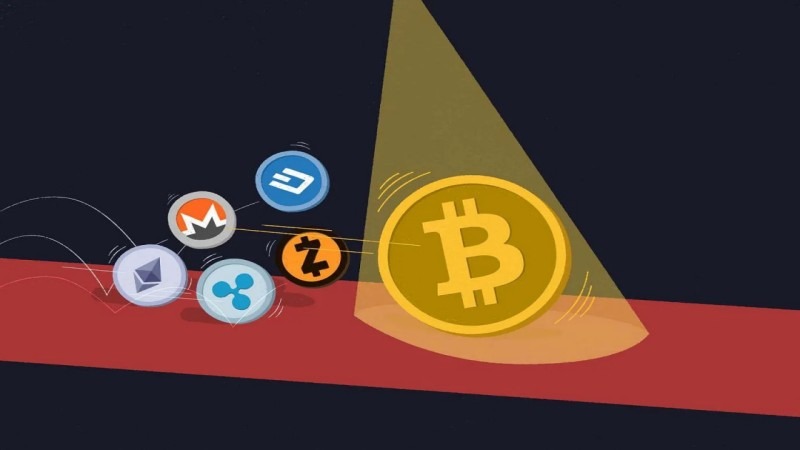
A Quick Guide to Different Types of Cryptocurrency
Not all cryptocurrencies are created equal. As the industry has evolved, different types have emerged, each serving a unique purpose. Understanding these categories is a key part of grasping cryptocurrency concepts.
Bitcoin (BTC): The First and Most Famous
Created in 2009 by the anonymous figure Satoshi Nakamoto, Bitcoin is the original cryptocurrency. Its primary purpose was to be a peer-to-peer electronic cash system, allowing online payments to be sent directly from one party to another without going through a financial institution. Today, due to its scarcity (only 21 million BTC will ever exist) and robust security, many view it as a form of ‘digital gold‘—a store of value designed to protect wealth from inflation over the long term.
Ethereum (ETH): The Smart Contract Platform
Launched in 2015, Ethereum is much more than just a digital currency. It is a decentralised global computer that allows developers to build and run decentralised applications (dApps) on its blockchain. This is made possible by ‘smart contracts’—self-executing contracts with the terms of the agreement directly written into code. These contracts automatically run when predetermined conditions are met, enabling a vast ecosystem of decentralised finance (DeFi), gaming, NFTs, and more. Ether (ETH) is the native cryptocurrency used to pay for transaction fees on the network.
Altcoins, Stablecoins, and NFTs
Beyond the two giants, thousands of other digital assets exist. They generally fall into these categories:
| Type | Purpose | Example(s) |
| Altcoins | Literally ‘alternative coins,‘ this term refers to any cryptocurrency other than Bitcoin. They often aim to improve upon Bitcoin’s design with different features like faster transaction speeds or greater privacy. | Solana (SOL), Cardano (ADA), Ripple (XRP) |
| Stablecoins | These cryptocurrencies are designed to maintain a stable value by being pegged to a real-world asset, typically a fiat currency like the US Dollar (e.g., 1 USDT aims to be worth $1). They are used as a stable medium of exchange within the volatile crypto market. | Tether (USDT), USD Coin (USDC) |
| NFTs (Non-Fungible Tokens) | These are unique digital assets that represent ownership of a specific item or piece of content, such as art, music, or a collectible. Unlike cryptocurrencies like Bitcoin, each NFT is one-of-a-kind and cannot be replaced with another. | CryptoPunks, Bored Ape Yacht Club |
How to Get Started: Understanding the Crypto Ecosystem
Once you have a grasp of the basic cryptocurrency concepts, the next logical step is to understand how the ecosystem works in practice. How do you actually enter this new financial world?
What Are Fiat ‘On-Ramps’ and ‘Off-Ramps’ ?
In the crypto world, ‘fiat‘ refers to traditional government-issued currency like the US Dollar ($), British Pound (£), or Euro (€). To get started, you need a way to convert your fiat money into cryptocurrency. This is known as an ‘on-ramp.’ Conversely, when you want to convert your cryptocurrency back into traditional money, you use an ‘off-ramp’. These ramps are the essential bridges between the traditional financial system and the crypto economy. A key component of this is understanding the processes for deposits and withdrawals, which are your primary on and off-ramps.
The Role of Cryptocurrency Exchanges
The most common type of on-ramp and off-ramp is a cryptocurrency exchange. These are online marketplaces where you can buy, sell, and trade a wide variety of cryptocurrencies. They function similarly to stock brokerages but for digital assets. When choosing an exchange, it’s vital to consider factors like security, fees, available coins, and user-friendliness. Reading reviews and ensuring the platform has a strong reputation for fund safety is crucial.
Beyond direct ownership, another way to gain exposure to the price movements of cryptocurrencies is through Contracts for Difference (CFDs). Platforms such as Ultima Markets offer CFD trading on popular cryptocurrencies. This allows you to speculate on whether the price will go up or down without actually owning the underlying digital asset. It’s a different approach often executed on advanced platforms like Ultima Markets MT5, suited for those more interested in trading price volatility.

Conclusion
Cryptocurrency represents a profound shift in how we think about money, ownership, and trust. While the technology can seem complex, it is built on a set of core principles that are logical and powerful. The key takeaways from this guide are that cryptocurrency is a revolutionary technology based on core cryptocurrency concepts like blockchain, decentralisation, and advanced cryptography.
Understanding these fundamentals is the essential first step for anyone looking to engage with digital assets, whether as an investor, a user, or simply a curious observer. This knowledge empowers you to look past the hype and make informed decisions. As you continue your learning journey, approach the market with both curiosity and caution. A firm grasp of these cryptocurrency concepts is your most valuable asset in this exciting new frontier.
FAQ
Q:What is the most basic concept of cryptocurrency?
The most basic concept is that cryptocurrency is a secure, digital form of money that operates on a decentralised network called a blockchain. This structure means it is free from the control of traditional intermediaries like banks or governments, allowing for peer-to-peer transactions on a global scale.
Q:What are the 3 main types of cryptocurrency?
The three main categories are: 1) Bitcoin, the original and largest cryptocurrency, often seen as digital gold; 2) Altcoins, which encompass all other cryptocurrencies besides Bitcoin (like Ethereum, Solana, and Cardano), each with unique features; 3) Stablecoins, which are pegged to a stable asset like the US dollar to minimise price volatility.
Q:How do you start learning about crypto?
The best way to start is by understanding the core concepts outlined in this guide: blockchain, decentralisation, public/private keys, and wallets. Once you have a handle on these fundamentals, you can begin researching specific projects like Bitcoin and Ethereum to understand their use cases. Following reputable news sources and educational platforms can also help you stay informed in this rapidly evolving space.
Q:Is cryptocurrency a good investment?
Cryptocurrency is considered a high-risk, highly volatile asset class. While it has demonstrated the potential for substantial returns, it can also lead to significant losses. There is no guarantee of profit. It is crucial to conduct your own thorough research (DYOR – Do Your Own Research), understand the inherent risks, and adhere to a fundamental rule of investing: never invest more than you can afford to lose.
Q:What is the biggest risk in crypto?
While there are many risks, the most significant ones for beginners are volatility and security. Prices can swing dramatically in short periods, leading to large potential losses. On the security front, if your private keys are lost or stolen, your funds are permanently gone with no recourse. This makes personal security practices, such as using strong passwords and secure wallets, absolutely paramount.