
This guide analyzes the market uncertainty caused by Trump tariffs, examining their real impact across asset classes. Using data-driven insights, it explains how traders can manage volatility and respond strategically to Trump tariffs.
What Exactly Are the Trump Tariffs?
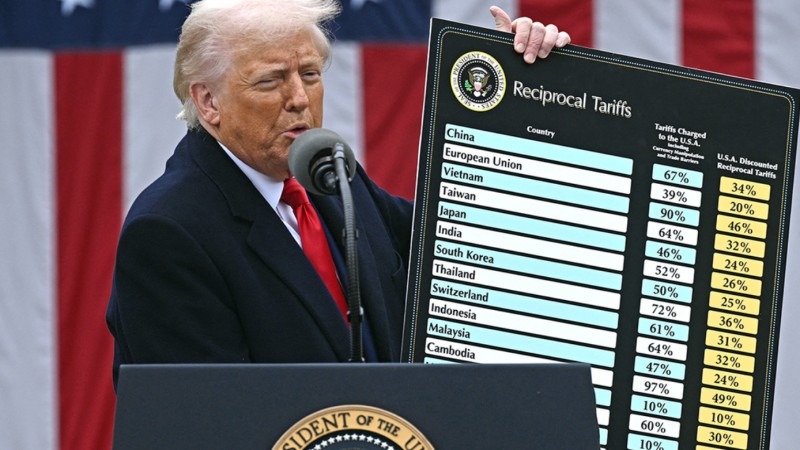
The Trump tariffs are a series of significant import taxes initiated by the Trump administration, primarily targeting goods from China but also affecting other nations. These levies, ranging from 10% to over 100% on certain goods, were designed to make imported products more expensive.
The administration’s stated goals were multi-faceted: to shrink the U.S. trade deficit, shield domestic industries from foreign competition, and pressure other countries, especially China, to reform their trade practices, particularly regarding intellectual property theft and market access. For traders, these tariffs transformed geopolitical rhetoric into direct market-moving events.
The Legal Basis: Section 301 and National Security
The administration primarily justified these tariffs using two key pieces of U.S. trade law. The first and most prominent was Section 301 of the Trade Act of 1974, which grants the U.S. President authority to retaliate against foreign trade practices deemed unfair or discriminatory. This formed the legal backbone for the extensive tariffs on Chinese goods, which the U.S. Trade Representative’s office argued were a response to China’s forced technology transfer policies and intellectual property theft.
The second was Section 232 of the Trade Expansion Act of 1962, which allows for tariffs on national security grounds. This was invoked to impose duties on steel and aluminium imports from a wide range of countries, including close allies like Canada, Mexico, and the European Union, sparking considerable international friction.
Who Pays for the Tariffs?
The economic burden of the Trump tariffs falls overwhelmingly on domestic consumers and businesses, not the exporting country. While the tax is levied on U.S. importers at the port of entry, this increased cost is systematically passed down the supply chain. Extensive research from institutions like the National Bureau of Economic Research (NBER) and the Congressional Budget Office (CBO) concluded that U.S. entities bore nearly the full cost.
For instance, a 25% tariff on a $1,000 industrial component imported from China meant the U.S. manufacturer paid $1,250. This additional $250 was then factored into the final product’s price, paid by the American consumer, or absorbed by the company, reducing its profit margins and potentially impacting its stock value.

The Core Conflict: A Timeline of the US-China Tariff War
The epicentre of the Trump tariffs policy was the escalating trade conflict with China, a multi-year saga of tit-for-tat tariffs affecting hundreds of billions of dollars in trade. This trade war injected unprecedented volatility into global financial markets, as traders scrambled to react to each new tariff announcement, negotiation rumour, and retaliatory measure. Understanding the key phases of this conflict is essential for comprehending the market’s behaviour during this period and anticipating potential future risks.
Key Phases of Tariff Implementation
The implementation of the Trump tariffs was not a single event but a series of escalating rounds. Each phase targeted different goods and triggered specific market reactions, creating a volatile but pattern-based trading environment.
| Date Range | U.S. Action | China’s Retaliation | Market Impact Example |
| Early 2018 | Global tariffs on steel (25%) and aluminium (10%). Initial $50 billion in tariffs on Chinese tech and industrial goods announced. | Tariffs on $3 billion of U.S. goods (pork, etc.). Later, tariffs on $50 billion of U.S. goods like soybeans and automobiles. | Chicago Board of Trade (CBOT) soybean futures plunged over 20% from May to July 2018. |
| Late 2018 | U.S. imposes 10% tariff on an additional $200 billion of Chinese goods. | China retaliates with tariffs on an additional $60 billion of U.S. goods. | The S&P 500 experienced a sharp correction, falling nearly 20% in Q4 2018 amid escalating trade fears. |
| 2019–2020 | U.S. raises tariff rate on the $200 billion list to 25%. “Phase One” trade deal signed, pausing further escalation. | Some retaliatory tariffs were adjusted as part of the deal, but most remained. | Temporary market relief saw indices rally, but the USD/CNY currency pair remained volatile, reflecting underlying uncertainty. |
| 2026 & Beyond | Discussions persist around new potential Trump tariffs, including a universal 10% baseline tariff or tariffs exceeding 60% on Chinese goods. | China has publicly stated it will respond proportionately to any new U.S. tariffs. | Markets are actively pricing in this geopolitical risk, affecting valuations of multinational corporations with significant global supply chains. |
Data-Driven Analysis: The Economic Impact of Trump Tariffs on Markets
The implementation of Trump tariffs has had a direct and measurable impact on the economy and financial markets, creating a complex landscape of risks and opportunities for traders. The primary effects can be categorised as increased costs for businesses and consumers, severe disruption to global supply chains, and a significant heightening of market volatility. Analysing these impacts with data is crucial for any trader seeking to navigate this environment.
Impact on Inflation and Corporate Earnings
The Trump tariffs directly contributed to price increases for specific goods, a fact supported by data from the Bureau of Labor Statistics (BLS). For instance, the price of washing machines rose by nearly 12% following the implementation of tariffs. This inflationary pressure is critical for traders as it directly impacts corporate profit margins and consumer spending.
Companies heavily reliant on imported components or finished goods, such as major retailers like Best Buy (BBY) and tech giants like Apple (AAPL), faced rising costs. These pressures were frequently cited in their quarterly earnings calls, leading to downward revisions in earnings guidance and subsequent negative impacts on their stock prices. A savvy trader would monitor not just CPI data but also company-specific reports on supply chain costs.
Sector-Specific Winners and Losers
The tariffs did not affect all sectors equally, creating distinct opportunities for sector rotation and pair trading strategies. Identifying the winners and losers is key to capitalising on the economic shifts caused by the Trump tariffs.
- Potential Winners: Domestic producers in protected industries initially benefited. For example, U.S. steel producers like U.S. Steel (X) and Nucor (NUE) saw a temporary boost in prices and stock valuations as the tariffs on foreign steel made their products more competitive in the domestic market.
- Clear Losers: The list of losers was extensive. U.S. agriculture, particularly soybean farmers, was devastated by Chinese retaliatory tariffs that erased their largest export market overnight. Technology companies like HP and Dell faced supply chain chaos and higher costs for electronic components sourced from China. Automakers such as Ford and GM were hit by a double whammy of higher metal prices and tariffs on imported parts, squeezing their margins.
The Ripple Effect on Global Indices and Forex
The uncertainty surrounding the Trump tariffs triggered significant movements across global financial markets, often prompting a broad “risk-off” sentiment where investors fled to perceived safe-haven assets.
- Indices: News of tariff escalations frequently caused immediate sell-offs in major U.S. indices like the Dow Jones Industrial Average (DJI) and S&P 500 (SPX). The impact was global, with markets in directly affected regions, such as the Shanghai Composite (SSEC) in China and the DAX in Germany (due to auto tariff threats), reacting with sharp negative movements.
- Forex: The foreign exchange market became a key battleground. The US Dollar (measured by the DXY index) often strengthened during periods of heightened tension, not due to economic strength but because of its status as a global safe-haven currency. Conversely, the Chinese Yuan (specifically the offshore CNH) faced significant depreciation pressure, acting as a direct barometer of trade tensions. Currencies of trade-dependent nations, like the Australian Dollar (AUD) and Canadian Dollar (CAD), also experienced heightened volatility.
Actionable Strategies for Trading the Trump Tariffs
Effectively trading in a market dominated by the Trump tariffs requires a strategic shift away from a purely fundamentals-based approach. Traders must integrate geopolitical news flow and robust risk management into their core methodology. The objective is to harness the volatility created by tariff announcements, rather than being victimised by the sudden market swings they produce. A proactive and informed approach is essential.
Strategy 1: Monitor Geopolitical News and Key Data
Your trading strategy must be inextricably linked to the real-time news cycle. When policy dictates market direction, being first to react to new information provides a significant edge. Set up alerts for announcements from key governmental bodies like the U.S. Trade Representative and China’s Ministry of Commerce.
Monitor key economic data that reflects the impact of the Trump tariffs, such as the Consumer Price Index (CPI), Producer Price Index (PPI), and Purchasing Managers’ Index (PMI). When tariff news breaks, markets can react in seconds, and preparedness is the difference between a profitable trade and a significant loss.
Strategy 2: Focus on Affected Asset Classes
Concentrating on the assets most sensitive to trade news allows for more precise trading. Different asset classes react in predictable ways to the implementation or threat of Trump tariffs.
- Forex: This is often the most direct way to trade geopolitical tension. Focus on currency pairs like USD/CNH, which is the primary proxy for US-China trade sentiment. Also, consider safe-haven currencies like the Japanese Yen (JPY) and Swiss Franc (CHF) for long positions during periods of escalating uncertainty.
- Stocks: Employ long/short pair trading strategies. Go long on companies insulated from tariffs (e.g., domestic service providers) and short on companies with high exposure to international supply chains (e.g., specific retailers, auto part manufacturers). Analyse company earnings reports for any mention of tariff-related cost pressures.
- Commodities: Trade the commodities at the epicentre of the disputes. Soybean futures became a direct bet on the state of US-China relations. Similarly, steel and aluminium futures saw large price swings based on the application and potential removal of Section 232 tariffs.
Using a Reliable Platform for Fast Execution
In a volatile, news-driven market, the speed and reliability of trade execution are paramount. A delay of milliseconds can result in significant slippage, turning a profitable trade into a loss. Using a platform such as Ultima Markets, which offers a robust trading infrastructure via its MT5 platform, can provide a distinct advantage. The ability to access a wide range of asset classes—forex, indices, and commodities—on a single platform allows traders to quickly pivot their positions in response to breaking news about Trump tariffs.
Furthermore, understanding the platform’s credibility through Ultima Markets Reviews and the security of your capital, as detailed in their fund safety policies, is crucial for trading with confidence. Fast access to your capital through efficient Deposits & Withdrawals is another key factor in managing your portfolio effectively during turbulent times.
Conclusion: Final Decision-Making Advice for Traders
The era of the Trump tariffs has cemented the link between geopolitical policy and market performance, making it a permanent fixture in any trader’s analytical framework. For traders, the most crucial takeaway is that tariffs and the threat of new trade barriers will likely remain a primary source of market-moving volatility. To succeed in this environment, a disciplined and adaptive approach is non-negotiable.
- Stay Informed: Geopolitical news is no longer background noise; it is a key market driver. Continuously track trade policy announcements and official rhetoric, as they often precede official action and market reaction.
- Manage Risk Rigorously: The unpredictable, headline-driven nature of tariff news demands strict risk management. Employ stop-loss orders on all positions, manage your leverage carefully, and avoid over-exposing your portfolio to a single tariff-sensitive sector.
- Be Adaptable: Be prepared to trade across different asset classes. The impact of the Trump tariffs may be most pronounced in forex one week and commodities the next. An agile strategy that can shift focus is essential.
By viewing tariffs not merely as a political development but as a core economic indicator influencing inflation, corporate earnings, and global capital flows, traders can better position themselves to navigate the inherent risks and seize the unique opportunities presented by this dynamic market environment.
Frequently Asked Questions about the Trump Tariffs
Q:What were the primary goals of the Trump tariffs?
The main stated goals of the Trump tariffs were to address the U.S. trade deficit, especially with China; combat alleged unfair trade practices and intellectual property theft; and encourage the reshoring of manufacturing jobs back to the United States by making domestic goods more competitive against imports.
Q:How did China retaliate against the U.S. tariffs?
China retaliated by imposing its own tariffs on a wide range of U.S. goods. Its strategy was to target politically sensitive sectors in the U.S., most notably agricultural products like soybeans, pork, and sorghum, which directly impacted the American farming industry. It also targeted U.S. manufactured goods, including automobiles and aircraft.
Q:Do U.S. consumers ultimately pay for the tariffs?
Yes, extensive research from multiple economic institutions, including the Congressional Budget Office and Federal Reserve, has concluded that the costs of the tariffs have been passed on almost entirely to U.S. importers, who in turn pass those costs to consumers and businesses through higher prices. This has been observed in the prices of washing machines, steel products, and a host of other consumer goods.
Q:Which U.S. industries were most negatively affected by the Trump tariffs?
The U.S. industries most negatively affected include agriculture (due to retaliatory tariffs), manufacturing (due to higher costs for imported parts and metals), the technology industry (relying on Chinese supply chains for components), and retail (which faces higher costs for imported consumer goods from apparel to electronics).
Q:What is the potential future of these tariffs?
The future of the Trump tariffs remains a key point of geopolitical and economic uncertainty. As of 2026, proposals under discussion include maintaining the existing tariffs, expanding them, or implementing a new universal baseline tariff of 10% on all imports. More aggressive proposals, such as a tariff of 60% or more specifically on Chinese goods, are also being considered. Traders must monitor policy discussions closely, as any of these scenarios would have a profound impact on global markets.
