
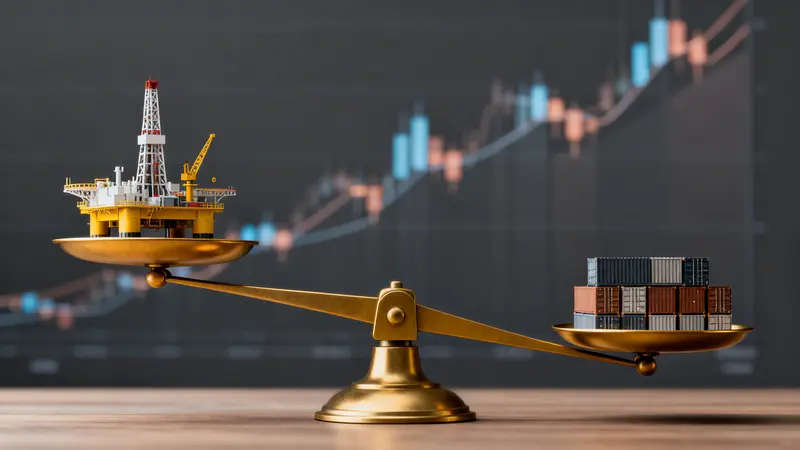
For traders navigating the complex crosscurrents of 2026, the debate over which affects inflation more, tariffs or oil prices, is not academic—it is a critical determinant of market positioning. The answer dictates sector allocations, duration risk, and currency exposure. In the short run, our analysis shows that volatile oil prices typically provide a faster and more direct shock to headline inflation metrics. However, over a longer horizon, the slow, corrosive effect of tariffs can create broader and more persistent price pressures, particularly within core inflation. Understanding this dynamic is crucial for anticipating central bank reactions and identifying alpha in a shifting macroeconomic landscape.
Table of Contents
The Short Answer: Oil Moves Faster, Tariffs May Last Longer
For any trader asking which affects inflation more, tariffs or oil prices, the decisive factor is the time horizon of your analysis and trade. The transmission mechanisms for these two inflationary forces operate on different clocks, creating distinct patterns of impact on economic data and market sentiment.
- Immediate Impact (Weeks to Months): Oil prices are the dominant force. A surge in crude costs translates almost immediately into higher gasoline, diesel, and jet fuel prices. This rapid pass-through ensures oil shocks are quickly reflected in headline Consumer Price Index (CPI) and Personal Consumption Expenditures (PCE) data, often causing sharp, visible spikes.
- Medium-Term Impact (Quarters to Years): Tariffs tend to have a more profound and lasting effect. The inflationary impulse from tariffs is a slower burn. It begins with higher costs for imported goods and intermediate components, which businesses may initially absorb. Over subsequent quarters, these costs are gradually passed to consumers, embedding themselves into the price structure and influencing ‘sticky’ core inflation.
- The Compounded Risk Scenario: The most challenging environment for markets and policymakers in 2026 arises when both forces act in concert. A simultaneous oil shock and the imposition of broad tariffs create a stagflationary pincer movement, squeezing corporate margins from both energy and input cost sides while eroding consumer purchasing power, making it a difficult scenario for risk assets.
Why Oil Prices Can Move Inflation More in the Short Term
The velocity of oil’s impact on inflation is a function of its pervasive role as a primary energy and transport input across the entire economy. Unlike tariffs, which target specific goods, energy is a universal cost component.
Direct Impact on Energy and Transport Costs
When crude oil prices surge, the effect on headline inflation is almost mechanical. The energy component of the CPI, as tracked by the U.S. Bureau of Labor Statistics, directly includes gasoline and fuel oil. For instance, a 10% increase in crude prices can translate into a significant rise in the overall CPI within a single month’s reading. In early 2026, we’ve observed this play out in real-time. Cleveland Fed inflation nowcasts showed headline CPI accelerating sharply in April 2026, primarily driven by a surge in energy prices, while core measures that exclude food and energy remained far more subdued. This divergence is a classic signal of an oil-driven inflationary impulse.
High Visibility and Immediate Effect on Households
A key psychological driver is the high visibility of fuel prices. Consumers see the price of gasoline on large signs every day, making it one of the most visible and frequently purchased items. This constant price signal has a disproportionate effect on inflation expectations and consumer sentiment. When households see gasoline prices rise from $3.50 to $4.00 per gallon, they immediately feel the pinch on their disposable income. This can lead to a rapid adjustment in spending behavior, often before the price changes of tariff-affected goods are even noticed on store shelves. This rapid feedback loop from pump prices to consumer psychology is a powerful short-term inflation amplifier.
Faster Pass-Through to Headline Inflation Figures
The structure of supply chains for petroleum products facilitates a rapid pass-through of price changes. From the refinery to the pump, pricing is dynamic and responds quickly to shifts in the underlying commodity market. This contrasts sharply with the pass-through of tariffs, which is often delayed by existing inventory, long-term supplier contracts, and corporate decisions about margin compression. As a result, when traders analyze which affects inflation more tariffs or oil prices on a month-over-month basis, the signature of an oil price shock will almost always appear in the headline data first.
Why Tariffs Can Matter More for Core Inflation Over Time
While oil shocks are sprints, tariff-induced inflation is a marathon. Its impact is less immediate but can become more deeply embedded in the economic structure, presenting a more stubborn challenge for central banks focused on core price stability.
Broader Pressure on Imported Goods Prices
Tariffs act as a tax on a wide array of imported consumer goods (like electronics and apparel) and intermediate inputs (like steel and semiconductors). This creates a broad, upward pressure on the cost base of the economy. Unlike an oil shock that primarily hits one category, tariffs can simultaneously raise the prices of thousands of distinct items. This widespread pressure is a key reason why tariffs can exert a more sustained influence on core goods inflation over time.
Delayed but Stickier Pass-Through to Consumers
The pass-through from tariffs to final consumer prices is a complex and lagged process. When a tariff is imposed, an importing company faces a choice: absorb the cost and accept lower profit margins, find a cheaper supplier, or pass the cost on to customers. This decision process takes time. Initially, many firms may use existing inventory or absorb the costs to maintain market share. However, over several quarters, as contracts are renegotiated and inventories are depleted, price increases become inevitable. This delayed pass-through means the inflationary impact builds incrementally, making it less volatile but more persistent than an oil price spike.
Potential Spillover into the Services Sector
A critical long-term effect of tariffs is their potential to spill over from the goods sector into the services sector. Services inflation is notoriously ‘sticky’ and constitutes a large portion of the core inflation basket. As the cost of goods used by service providers rises—for example, new equipment for a gym, auto parts for a repair shop, or furniture for a hotel—those businesses eventually raise their service prices to protect margins. Seminal research, including a March 2026 working paper from the San Francisco Fed, has highlighted this transmission channel, showing that services inflation can continue to rise long after the initial tariff shock, making it a more entrenched problem.
Influence on Long-Term Business Pricing Behavior
Sustained tariffs can fundamentally alter corporate behavior. They can incentivize businesses to redesign their supply chains, moving production to different regions to avoid levies. This ‘reshoring’ or ‘friend-shoring’ is often costly and inflationary in the medium term as new factories are built and logistical networks are established. These are structural changes, and the associated higher costs get baked into the long-term pricing models of businesses, contributing to a higher baseline for core inflation.
Impact Analysis: Headline vs. Core Inflation and Consumer Sentiment
To effectively position trades, it’s essential to dissect how these two forces uniquely impact different economic metrics. The question of which affects inflation more, tariffs or oil prices, has a different answer depending on what you are measuring.
| Metric | Impact of Oil Prices | Impact of Tariffs |
|---|---|---|
| Headline Inflation | More Pronounced and Faster. Energy is a direct and volatile component of headline CPI. Oil shocks cause immediate and often dramatic swings in the headline number, even when underlying inflation is stable. | More Delayed and Gradual. The impact is diffused across many goods categories and builds over time, leading to a less dramatic but steadier upward pressure on the headline figure. |
| Core Inflation | Indirect and Conditional. A brief oil spike has little effect. However, a prolonged period of high energy prices can eventually bleed into core as businesses pass on higher transport and operating costs. | Deeper and More Persistent. Tariffs directly target core goods and can spill over into core services. This makes them a more significant long-term driver of underlying, ‘sticky’ inflation. For more on this, see research from the Federal Reserve Bank of Boston. |
| Consumer Pain & Sentiment | Felt More Acutely and Immediately. Highly visible gasoline prices are a major factor in household budgets and psychology. The pain is immediate, directly impacting consumer confidence and discretionary spending. | Less Visible but Corrosive. Consumers may not notice a 5% price increase on a new appliance or pair of shoes as acutely, but the cumulative effect across hundreds of goods slowly erodes real purchasing power over time. |
| Business Margins | Squeezes Transport and Operations. Airlines, logistics companies, and energy-intensive manufacturing face immediate margin compression from higher fuel and utility costs. | Squeezes Cost of Goods Sold (COGS). Retailers, auto manufacturers, and importers of finished goods see their COGS rise directly, pressuring gross margins. |
How Markets React Differently to Tariff and Oil-Driven Inflation
The divergent nature of these inflationary shocks elicits distinct reactions across asset classes. A savvy trader must recognize these patterns to navigate the resulting volatility and identify opportunities.
Equity Market Responses
Oil price shocks tend to trigger a faster, more broad-based risk-off reaction in equity markets. The fear is one of stagflation—slowing growth due to higher energy costs combined with rising inflation. This hurts consumer discretionary sectors (airlines, cruise lines, restaurants) and transport-heavy industrials almost immediately. The primary exception is the energy sector itself, which often rallies on higher commodity prices, creating a classic pair trade opportunity. Tariff-driven inflation, in contrast, tends to have a more staggered and sector-specific initial impact. Import-heavy sectors like retail, apparel, and auto parts are the first to come under pressure as their margins are directly threatened. Defensive sectors like utilities and healthcare may prove more resilient in the initial phase.
Bond and Fixed Income Yields
The bond market’s reaction is nuanced. A sharp oil spike can cause a ‘bear flattening’ of the yield curve, where short-term yields rise faster than long-term yields as the market prices in a more aggressive near-term central bank response to headline inflation. However, if the shock is severe enough to trigger recession fears, long-term yields may eventually fall on a flight to safety. Tariffs create a different conundrum. They tend to exert a more persistent upward pressure on core inflation, which can keep long-term yields elevated as investors demand a higher term premium to compensate for long-run inflation uncertainty. This can lead to a ‘bear steepening’ if growth expectations remain anchored.
U.S. Dollar and Currency Fluctuations
During a global oil shock, the U.S. dollar often benefits from a safe-haven bid, especially if the shock originates from geopolitical instability. Capital flows into the perceived safety of U.S. Treasury bonds, strengthening the dollar. The reaction to tariffs is less clear-cut. While higher domestic inflation could argue for a stronger dollar via higher interest rates, concerns about the impact of tariffs on trade balances and economic growth can act as a countervailing headwind.
Central Bank Policy Expectations
This is the critical variable. Central banks often try to ‘look through’ a temporary oil shock, arguing that its effect on headline inflation will be transitory. However, if the shock is large or prolonged, it can de-anchor inflation expectations, forcing a policy response. Tariffs present a more difficult problem. Because they feed into core inflation, they challenge the central bank’s primary mandate. Policymakers are forced to weigh the risk of letting core inflation run hot against the risk of tightening policy into a potential tariff-induced economic slowdown.
Scenario Analysis: When Tariffs Matter More Than Oil (And Vice Versa)
The answer to which affects inflation more, tariffs or oil prices, is context-dependent. A trader’s framework must be flexible enough to identify the dominant driver in the prevailing economic environment.
| Scenario | What Matters More | Rationale for Traders |
|---|---|---|
| 1. Sustained Tariffs, Stable Oil Prices | Tariffs | In this environment, the market’s focus shifts from headline volatility to the persistent, grinding pressure on core inflation. Traders should monitor corporate margin data in the retail and industrial sectors and watch for evidence of spillovers into services inflation. This setup complicates the central bank’s job and can lead to policy uncertainty. |
| 2. Short-Term Oil Spike, Limited Tariffs | Oil Prices | This is a classic supply shock scenario. The primary trade is to analyze the speed of the pass-through to headline CPI and gauge the central bank’s reaction function. Is the shock seen as transitory? Positioning would favor energy producers over energy consumers in the short term. For further reading, see our beginner’s guide to trading oil futures. |
| 3. Prolonged Oil Disruption + Broad Tariffs | Both (Stagflationary Shock) | This is the most dangerous scenario for risk assets. Both headline and core inflation are under upward pressure, while growth is threatened from all sides. Consumer and business confidence plummets. In this setup, capital preservation becomes key. Defensive assets, commodities, and inflation-protected securities may outperform. Explore our strategies for how to invest during periods of high inflation. |
Conclusion: Key Takeaways for Traders and Investors
The debate over which affects inflation more, tariffs or oil prices, should not be a search for a single, static answer. The sophisticated investor recognizes that the answer changes with market conditions and time horizons. The key is to move beyond the headline question and adopt a more dynamic analytical framework.
Instead of asking which matters more in the abstract, traders should focus on a more practical set of questions for 2026:
- Which shock is moving faster right now? Is the most recent data showing a spike in the energy component of CPI or a gradual firming in core goods prices?
- Which shock is more visible to consumers and businesses? Are inflation expectations being driven by prices at the pump or by broader price increases across a range of products?
- Which shock is likely to persist longer? Is the oil price move seen as a temporary disruption, or are the tariffs part of a longer-term structural shift in trade dynamics?
- Is the market facing one shock or both at the same time? Acknowledging the risk of a combined stagflationary shock is critical for risk management.
In summary, oil prices deliver the fast, headline-grabbing inflationary punch. Tariffs deliver the slower, body blows that can wear down the economy over time by embedding themselves into core inflation. The most dangerous environment for markets is when both fighters are in the ring at once. Recognizing which opponent is dominant at any given moment is the key to successfully trading this complex macroeconomic environment.
Frequently Asked Questions (FAQ)
1. Do oil prices affect inflation more than tariffs?
In the short term, typically yes. Oil prices have a rapid and direct impact on headline inflation because energy costs, particularly gasoline, are a significant and quickly-adjusting component of consumer price indices. The pass-through from crude oil to consumer prices is much faster than that of tariffs.
2. Are tariffs more important for core inflation?
Often, yes, over a longer time horizon. Tariffs raise the cost of a wide range of imported goods, which are a key part of the core inflation basket. This effect can be slow to build but is often more persistent and can spill over into the services sector, making it highly relevant for the underlying, ‘sticky’ trend in inflation that central banks monitor closely.
3. Why do gas prices move consumer sentiment so quickly?
Gas prices have a powerful psychological impact due to their high visibility and frequency of purchase. Consumers are confronted with fuel prices daily on large, prominent signs. This constant reminder of rising costs immediately impacts household budgets and can quickly sour consumer sentiment and inflation expectations, often much faster than more subtle price changes in other goods.
4. Can tariffs and oil prices push inflation up together?
Yes, and this represents a worst-case ‘stagflationary’ scenario for the economy and markets. In this situation, tariffs are pushing up the cost of goods while high oil prices are increasing energy and transportation costs. This dual shock squeezes corporate profit margins from two directions and simultaneously erodes consumer purchasing power, creating a difficult environment of rising inflation and slowing economic growth.
