
The Bitcoin halving is one of the most significant and widely discussed events in cryptocurrency, programmed to happen regularly and often linked to big price changes. This article explains what the halving bitcoin is, why it matters for the Bitcoin network’s design, and how it can affect miners, prices, and your investments. We will explore its history, its economic implications, and potential strategies for both beginners and seasoned investors.
What is the Bitcoin Halving? A Foundational Guide
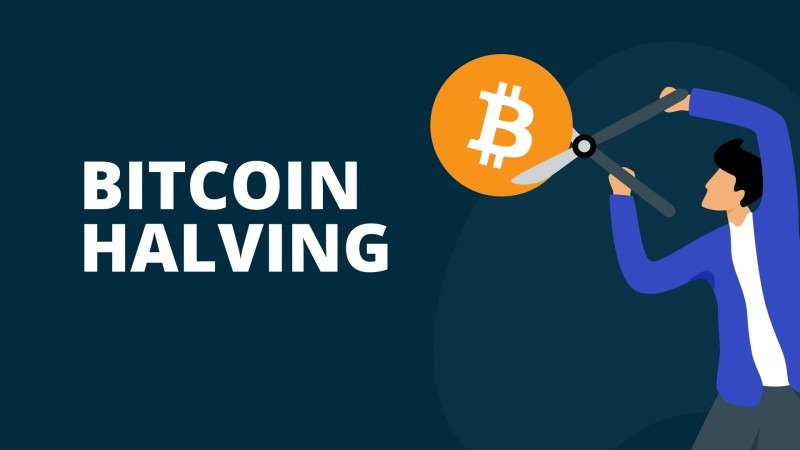
At its core, the Bitcoin halving is a simple yet powerful event hard-coded into Bitcoin’s protocol. It is the process that reduces the rate at which new bitcoins are created. This ensures the total supply of Bitcoin is finite and released at a predictable, slowing pace. To truly grasp its importance, one must first understand how new bitcoins come into existence.

The Core Mechanism: Cutting the Block Reward in Half
New bitcoins are generated through a process called ‘mining’. Miners use powerful computers to solve complex mathematical problems. When a miner successfully solves a problem, they get to add the next ‘block’ of transactions to the Bitcoin blockchain. As a reward for their computational effort and for securing the network, they receive a certain number of new bitcoins. This is known as the block reward.
The halving event occurs automatically after every 210,000 blocks are mined, which takes roughly four years. When a halving happens, the block reward given to miners is cut in half. This halving continues until the block reward effectively becomes zero, and the maximum supply of 21 million BTC is reached.
- Initially, the block reward was 50 BTC.
- In 2012, it was halved to 25 BTC.
- In 2016, it was halved to 12.5 BTC.
- In 2020, it was halved to 6.25 BTC.
- Most recently, in April 2024, it was halved to 3.125 BTC.
Think of it like a gold mine where the veins of gold become progressively harder to find and extract over time. Initially, gold is plentiful, but as the mine is depleted, more effort is required to find smaller amounts. This increasing difficulty and scarcity is what can drive up the value of the extracted gold.
Why Was the Bitcoin Halving Created?
The creator of Bitcoin, the pseudonymous Satoshi Nakamoto, designed the halving mechanism to introduce digital scarcity and control inflation. This stands in stark contrast to traditional fiat currencies (like the US Dollar or the British Pound), which central banks can print at will, potentially leading to devaluation over time.
The key principles behind the halving are:
- Controlled Supply: The halving ensures that the issuance of new BTC slows down in a predictable manner. This creates a finite supply capped at 21 million coins, mimicking the scarcity of precious metals like gold.
- Anti-Inflationary Measure: By reducing the rate of new supply, the halving acts as a built-in safeguard against inflation. If demand for Bitcoin remains steady or increases whilst the new supply is reduced, basic economic principles suggest the price should rise. This design makes Bitcoin a ‘disinflationary’ asset, as its rate of inflation trends towards zero.
- Predictable Issuance: The entire supply schedule of Bitcoin was determined on day one. Anyone can verify when halvings will occur and how many bitcoins will be in circulation at any point in the future. This transparency is a core feature of its design.
A Complete History of Bitcoin Halving Events
To understand the potential future impact of a halving Bitcoin event, it is essential to examine its history. Each past halving has been a significant milestone, often preceding a period of intense market activity and price appreciation. This historical context provides valuable data for analysis.
Key Dates and Reward Reductions
The history of Bitcoin halvings is a clear timeline of its programmatic monetary policy in action. The following table provides a concise summary of these pivotal events:
| Event | Date | Block Height | Block Reward Before | Block Reward After |
| 1st Halving | 28 Nov 2012 | 210,000 | 50 BTC | 25 BTC |
| 2nd Halving | 9 Jul 2016 | 420,000 | 25 BTC | 12.5 BTC |
| 3rd Halving | 11 May 2020 | 630,000 | 12.5 BTC | 6.25 BTC |
| 4th Halving | 19 Apr 2024 | 840,000 | 6.25 BTC | 3.125 BTC |
How to Track the Countdown to the Next Halving
The next halving is projected to occur around 2028. Because the event is tied to block height (specifically, block 1,050,000), not a specific date, the exact timing can vary slightly. The Bitcoin network aims to produce a new block roughly every 10 minutes. Numerous websites and blockchain explorers provide live countdown clocks that estimate the date of the next halving based on the current block generation speed.
How the Halving Historically Impacts Bitcoin’s Price
This is the central question for most investors: what does the halving mean for Bitcoin’s price? Historically, each halving has been a powerful bullish catalyst, setting the stage for a significant price rally in the 12 to 18 months that follow. This is largely attributed to the economic principle of a ‘supply shock’.

The Post-2012 Halving Bull Run
Prior to the first halving in November 2012, Bitcoin was a niche asset trading for around $12. The event itself did not cause an immediate price explosion. However, in the following year, the impact of the reduced supply became apparent. By late 2013, Bitcoin’s price had surged dramatically, peaking at over $1,100—a nearly 100-fold increase from its pre-halving price.
The 2016 Halving and the 2017 Crypto Boom
The second halving in July 2016 saw Bitcoin trading at approximately $650. The market had matured since 2012, with greater public awareness. Similar to the first cycle, the price consolidated for several months post-halving. Then, in 2017, the market entered an unprecedented bull run. The combination of the supply reduction, increased media attention, and a surge in retail investor interest propelled Bitcoin to its then all-time high of nearly $20,000 by December 2017.
The 2020 Halving and the Road to a New All-Time High
The third halving occurred in May 2020, with Bitcoin’s price around $8,600. This event took place amidst a unique global economic climate, with significant monetary stimulus from central banks. Once again, the pattern held. Following a period of consolidation, Bitcoin began a powerful rally in late 2020, which continued into 2021. The price soared past its previous records, reaching a new all-time high of over $68,000 in November 2021. This cycle was also marked by significant institutional adoption, adding another layer of demand.
Key Takeaway: A Pattern of Supply Shock
The historical data reveals a clear and consistent pattern: a reduction in the new supply of Bitcoin (the ‘supply shock’) meeting steady or, more often, increasing demand, creates significant upward pressure on the price. This effect is not immediate but tends to play out over the 12-18 months following the halving. However, it is crucial to remember that past performance is not a guarantee of future results, and other market factors always play a role.
The Impact on Bitcoin Miners: A Balancing Act
Whilst investors often focus on price, the halving has a more direct and immediate impact on the individuals and companies that secure the network: the miners. For them, the halving represents both a significant challenge and a potential opportunity.

The Challenge of Reduced Rewards vs. Rising BTC Price
The moment a halving occurs, the revenue miners generate from block rewards is instantly cut by 50%. This is a severe economic shock. For a mining operation to remain profitable, one of two things must happen:
- The price of Bitcoin must rise significantly (ideally doubling, all else being equal) to offset the reduction in BTC-denominated rewards.
- Miners must drastically reduce their operational costs.
Historically, the subsequent rise in Bitcoin’s price has more than compensated for the reward reduction, leading to periods of immense profitability for the surviving miners. However, there is a period of uncertainty immediately following the halving.
The Race for Efficiency and Survival
Bitcoin halvings act as a powerful catalyst for innovation and efficiency in the mining industry. They force miners to constantly seek competitive advantages. This typically involves:
- Seeking Cheaper Electricity: As power is the primary operational cost, miners relocate to regions with the cheapest energy sources, often utilising renewable energy to lower costs and improve their environmental credentials.
- Upgrading Hardware: Miners must invest in the latest generation of Application-Specific Integrated Circuit (ASIC) miners. These machines offer more hashing power (computational speed) for less energy consumption.
This process creates a survival-of-the-fittest environment. Miners with high electricity costs or outdated equipment become unprofitable and are forced to shut down. This can cause a temporary drop in the network’s total computational power (hashrate). However, the Bitcoin protocol has a built-in ‘difficulty adjustment’ mechanism that re-calibrates every 2,016 blocks (roughly two weeks) to ensure blocks continue to be found every 10 minutes on average, thus maintaining network security.
How to Strategise for the Bitcoin Halving
Given the historical significance of the Bitcoin halving, many investors look to position their portfolios to capitalise on the event. It is important to approach this with a clear strategy and an understanding of the risks involved. Choosing a reliable and secure platform is the first step; many traders review brokerages like Ultima Markets Reviews to assess features and security. Ensuring the safety of your assets is paramount, and understanding a platform’s commitment to fund safety is a critical part of due diligence.
Long-Term Perspective: Accumulation and “HODLing”
The most common strategy, based on historical precedent, is to accumulate Bitcoin in the months leading up to and following the halving and hold it for the long term. This strategy, known in the crypto community as “HODLing” (a misspelling of ‘hold’ that has become a mantra), is based on the belief that the supply shock will inevitably drive the price higher over the subsequent 12-18 month cycle. Investors adopting this approach often use techniques like dollar-cost averaging (DCA)—investing a fixed amount of money at regular intervals—to build their position without trying to time the market perfectly.
Short-Term Trading: “Buy the Rumour, Sell the News”
More active traders might try to profit from the volatility surrounding the halving. A common market phenomenon is ‘buy the rumour, sell the news,’ where an asset’s price rallies in anticipation of a positive event, only to experience a correction once the event actually occurs. Traders might buy into Bitcoin in the months before the halving and sell shortly after to capture this pre-event momentum. This is a high-risk strategy that requires precise timing and a deep understanding of market dynamics. Utilising advanced trading platforms like MetaTrader 5 can provide the necessary tools for such analysis. However, the volatility can lead to significant losses if not managed carefully.
The Role of Diversification
Regardless of the bullish narrative surrounding the halving, it is a cornerstone of responsible investing to maintain a diversified portfolio. Cryptocurrencies are inherently volatile assets. Over-exposing your portfolio to a single asset, even one with a strong catalyst like Bitcoin, is highly risky. A balanced approach might involve allocating a smaller percentage of a wider portfolio to Bitcoin and other digital assets. This ensures that even if the halving cycle does not play out as it has in the past, your overall financial position is not unduly compromised. Getting started with a diverse portfolio often begins with understanding the deposits & withdrawals process on your chosen platform.
Conclusion
The Bitcoin halving is more than just a technical update; it is the core of Bitcoin’s economic philosophy. As a fundamental, pre-programmed event, it enforces digital scarcity and underpins the asset’s value proposition as a potential store of value. Historically, it has been a major catalyst for bull markets by creating a predictable supply shock.
While the impact of halving Bitcoin‘s new supply is powerful and its history compelling, investors should approach it with a clear strategy, an appreciation of market cycles, and a firm understanding of the associated risks. The phenomenon remains a cornerstone of the cryptocurrency’s economic model and a key event for all market participants to watch in the years to come when trading on platforms like Ultima Markets.
FAQ
Q:What happens to Bitcoin’s price immediately after a halving?
Historically, there is no dramatic, immediate price explosion right after the halving. The price often trades sideways or experiences a slight correction. The significant upward price movements tend to build gradually in the months following the event as the supply reduction’s cumulative effect begins to be felt across the market.
Q:How many Bitcoin halvings are left?
Bitcoin halvings will continue to occur every 210,000 blocks until the block reward becomes less than one satoshi (the smallest unit of a bitcoin). This is estimated to happen around the year 2140 when the 21 million BTC cap is reached. After this point, miners will be compensated solely through transaction fees paid by users of the network.
Q:Does the Bitcoin halving affect other cryptocurrencies?
Yes, it often does. Bitcoin is the market leader and its price movements have a strong influence on the entire cryptocurrency ecosystem. A significant bull run in Bitcoin’s price post-halving has historically lifted the broader market, leading to what is often called an “altcoin season,” where other cryptocurrencies experience substantial price gains.
Q:Is the Bitcoin halving a guaranteed way to make a profit?
No. Absolutely not. While historical data shows a strong correlation between halvings and subsequent bull markets, past performance is not an indicator of future results. The cryptocurrency market is influenced by a multitude of factors, including macroeconomic conditions, regulatory changes, technological developments, and market sentiment. The halving is a bullish factor, but it does not guarantee profits.
Q:Will the impact of future Bitcoin halvings diminish over time?
This is a subject of debate amongst analysts. One theory suggests that as the block reward becomes a smaller and smaller percentage of the total circulating supply, the impact of each subsequent halving on supply dynamics will lessen. The market is also maturing, with higher liquidity and more institutional players, which could lead to more price stability and less dramatic post-halving rallies compared to the early cycles.