
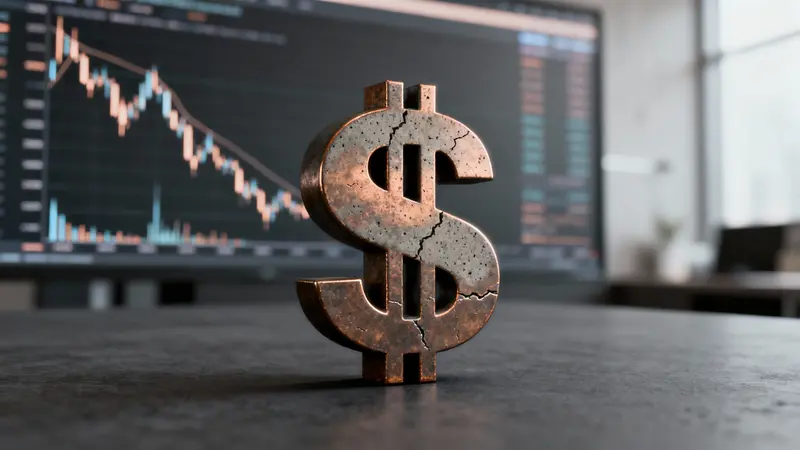
Risks of Buying US Dollars 1. The Top 5 Financial Risks of Holding US Dollars
While the US dollar is often hailed as the world’s primary reserve currency, treating it as a risk-free asset is a significant oversight for any investor. The risks of buying US dollars are multifaceted, stemming from economic policies, market dynamics, and geopolitical shifts. Understanding these dangers, particularly what affects the US dollar value, is the first step toward building a resilient financial strategy for 2026. This guide will dissect the primary threats to your dollar-denominated assets and explore effective ways to mitigate them.
Currency Fluctuation and Exchange Rate Risk
The most direct risk of holding any currency is that its value can fall relative to others. The foreign exchange market is a dynamic environment where currency values, or exchange rates, are constantly shifting. For an investor, this means the USD you hold today might buy fewer euros, yen, or pounds tomorrow. This is exchange rate risk.
Think of it like this: if you hold USD but plan to spend or invest in Europe, a weakening dollar against the euro means your wealth has effectively decreased in that region. Several factors drive these fluctuations:
- Trade Balances: A large and persistent U.S. trade deficit (importing more than exporting) can place downward pressure on the dollar as more USD is sold to buy foreign goods.
- Economic Growth: If other economies are growing faster than the U.S., their currencies may become more attractive to investors, strengthening them against the dollar.
- Market Sentiment: In times of global economic stability, investors may sell “safe-haven” assets like the USD to buy riskier assets in other currencies with higher potential returns.
Scenario: The Impact of a 5% Dollar Depreciation
Imagine a U.S.-based company needs to pay a European supplier €1,000,000 in three months.
– Today’s Rate: 1 USD = 0.95 EUR. The cost is $1,052,631.
– Future Rate (USD weakens 5%): 1 USD = 0.90 EUR. The cost becomes $1,111,111.
– The Result: A seemingly small shift in the exchange rate increases the company’s costs by over $58,000. This illustrates the tangible impact of currency risk.
Inflation and Loss of Purchasing Power
One of the most insidious risks of buying US dollars is inflation. Even if your dollar amount stays the same, its purchasing power—what you can actually buy with it—steadily declines over time. Holding cash is like being on a treadmill that’s slowly moving backward; you’re losing ground even while standing still.
In recent years, inflation has proven to be less ‘transitory’ than initially hoped. Factors like supply chain disruptions, shifts in consumer demand, and expansive government spending contribute to rising prices. When the rate of inflation is higher than the interest you earn on your cash holdings, you are experiencing a negative real return. For example, if inflation is at 3% and your savings account yields 1%, your purchasing power is diminishing by 2% annually. This erosion of value is a significant, yet often underestimated, risk of holding cash.
Interest Rate Risk and Federal Reserve Policies
The value of the US dollar is heavily influenced by the monetary policy of the U.S. Federal Reserve (the Fed). The Fed’s decisions on interest rates are a primary driver of the dollar’s strength or weakness. Understanding this relationship is crucial.
- Higher Interest Rates: When the Fed raises interest rates, it becomes more attractive for foreign investors to hold US dollars to earn higher returns on dollar-denominated assets (like U.S. government bonds). This increased demand typically strengthens the dollar.
- Lower Interest Rates: Conversely, when the Fed lowers rates, the incentive to hold dollars decreases, and investors may seek higher yields elsewhere. This tends to weaken the dollar.
The risk lies in the uncertainty of the Fed’s future actions. Unexpected changes in policy, or even shifts in tone from Fed officials, can cause rapid and significant volatility in the currency markets. Investors who are heavily concentrated in USD are directly exposed to these policy-driven risks. To learn more, consider reading about the Federal Reserve’s monetary policy impact on forex.
Geopolitical and Economic Instability
The US dollar’s status as a ‘safe haven’ is built on the foundation of U.S. economic and political stability. However, this foundation is not unshakeable. Geopolitical events and domestic instability can erode confidence in the dollar, posing a significant risk.
Key factors include:
- U.S. National Debt: A continually growing national debt can lead to concerns about the government’s ability to meet its obligations, potentially devaluing the currency in the long term.
- Political Polarization: Contentious elections, policy deadlocks, or social unrest can create uncertainty that spooks international investors.
- Global Power Shifts: The gradual trend of ‘de-dollarization,’ where countries seek to conduct trade in other currencies, could reduce global demand for the USD over the long run, affecting its value.
While the dollar remains dominant, relying on its past stability without acknowledging these growing cracks is a risky proposition.
Opportunity Cost vs. Other Investments
Perhaps the most certain risk of holding US dollars, especially in cash, is opportunity cost. Every dollar sitting in a low-yield bank account is a dollar that isn’t working for you. While other asset classes are generating returns, cash is, at best, stagnant and, more likely, losing value to inflation.
Consider the potential returns you might be forfeiting:
| Asset Class | Potential Annual Return (Hypothetical) | Primary Function |
|---|---|---|
| US Dollar (Cash) | ~0-1% (in a savings account) | Liquidity, Perceived Safety |
| Global Equities (Stocks) | ~5-10% (long-term average) | Growth, Capital Appreciation |
| Corporate Bonds | ~3-5% | Income, Relative Stability |
| Real Estate (Rental) | ~4-8% (yield + appreciation) | Income, Inflation Hedge |
By holding an excessive amount of cash, you are actively choosing not to participate in the growth potential of the global economy. This is a conservative stance that carries its own profound risk: the failure to grow your wealth and outpace inflation.
Risks of Buying US Dollars 2. Key Disadvantages of Investing in the US Dollar
Beyond the direct financial risks, treating the US dollar as a primary investment vehicle has several inherent disadvantages that can hinder your long-term financial goals.
Low Returns Compared to Equities or Bonds
Cash is not a growth asset. Its primary purpose in a portfolio is to provide liquidity and stability, not to generate significant returns. As demonstrated by the opportunity cost analysis, asset classes like stocks and bonds are designed to provide capital appreciation and income, respectively. Over any meaningful period, the returns from these productive assets have historically far outpaced the returns from holding currency. Relying on the dollar as an ‘investment’ is a strategy for wealth preservation at best, and wealth erosion at worst.
The Myth of the “Perfectly Safe” Asset
The term “safe haven” is often misconstrued as “risk-free.” No asset is truly free of risk. While the US dollar is less volatile than individual stocks or cryptocurrencies, it is still subject to the major macroeconomic and geopolitical risks outlined above. Black swan events, unexpected economic crises, or a sudden loss of confidence can impact the dollar just like any other asset. The perception of perfect safety can lead to complacency and an over-concentration of risk in a single currency.
Liquidity and Transaction Costs
While the US dollar is the world’s most liquid currency, this advantage can obscure hidden costs. Converting USD to other currencies or assets always involves transaction fees, whether they are explicit commissions or the bid-ask spread charged by brokers and banks. For investors frequently moving in and out of different currencies or international assets, these costs can add up. Furthermore, for those needing to transact in less common currencies, the spreads can be significantly wider, leading to greater costs. Platforms like Ultima Markets Deposits & Withdrawals provide transparency on these processes, which is crucial for active investors.
Risks of Buying US Dollars 3. What to Do If the US Dollar Depreciates: 3 Smart Strategies
Recognizing the risks of buying US dollars is only half the battle. The next step is to implement strategies that protect your portfolio from a potential decline in the dollar’s value. Here are three effective approaches.
Diversifying Your Currency Portfolio
The principle of not putting all your eggs in one basket applies just as much to currencies as it does to stocks. Holding a portion of your liquid assets in other major world currencies can provide a buffer if the USD weakens. Currencies to consider include:
- The Euro (EUR): Represents the large and diversified Eurozone economy.
- The Swiss Franc (CHF): Traditionally viewed as a stable safe-haven currency due to Switzerland’s political neutrality and strong financial system.
- The Japanese Yen (JPY): Another traditional safe haven, often appreciating during times of global uncertainty.
Diversification reduces your reliance on the economic fortunes of a single country and smooths out portfolio returns.
Hedging with Assets like Gold and Commodities
Certain real assets have a historically inverse relationship with the US dollar. When the dollar weakens, the price of these assets, when denominated in USD, often rises. This makes them effective hedging tools.
Recommended Reading
For those considering precious metals as a defensive play, our guide on investing in gold as a hedge provides a deep dive into the strategies and market dynamics involved.
Gold is the classic example. It is seen as a store of value that is independent of any single government’s monetary policy. Commodities like oil, copper, and agricultural products are also priced in US dollars globally. When the dollar’s value falls, it takes more dollars to buy the same amount of these goods, causing their prices to rise. Investing a portion of your portfolio in these assets can offset losses from a depreciating dollar. Explore your options with a trusted broker like Ultima Markets.
Investing in Foreign Markets and Equities
One of the best ways to protect against a weak US dollar is to own assets that generate revenue in other currencies. By investing in international stock markets, you gain exposure to companies whose earnings, dividends, and growth are tied to economies outside the United States.
When the dollar weakens, the returns from these foreign investments translate back into more US dollars, boosting your portfolio’s performance. For example, if you own shares in a European company and the Euro strengthens by 10% against the dollar, your investment is worth 10% more in dollar terms, even before accounting for any appreciation in the stock’s price. This strategy allows you to participate in global growth and provides a natural hedge against domestic currency risk. An introduction to foreign market investing can be a great starting point.
Risks of Buying US Dollars 4. Conclusion
The US dollar’s role as the world’s premier currency is undeniable, but its stability should never be taken for granted. The risks of buying US dollars—from the visible threat of exchange rate fluctuations to the silent erosion of inflation and the significant opportunity cost of not investing—are real and impactful. For investors in 2026, a passive approach to holding dollars is a strategy fraught with peril. A proactive, global perspective is essential. By diversifying across currencies, hedging with real assets like gold, and investing in international markets, you can build a more robust portfolio that is not solely dependent on the fortunes of a single currency, thereby safeguarding your wealth against an uncertain future.
Risks of Buying US Dollars 5. FAQ
1. Is it a good time to buy US dollars now?
This depends entirely on your individual circumstances, investment horizon, and currency needs. If you need USD for near-term transactions or as a portion of a diversified portfolio, buying might be necessary. However, as an investment, the decision is more complex. In 2026, factors like the Federal Reserve’s stance on interest rates, U.S. inflation data, and the global geopolitical climate must be considered. Given the risks of a weakening dollar, it’s rarely advisable to make a large, speculative purchase. A better approach is to assess the dollar’s value relative to other currencies and assets and avoid being over-concentrated.
2. How does U.S. national debt affect the dollar’s value?
The U.S. national debt affects the dollar primarily through investor confidence. A large and rapidly growing debt load can raise concerns about the government’s long-term ability to repay its creditors without resorting to printing more money (which is inflationary). If global investors begin to believe the debt is unsustainable, they might demand higher interest rates on U.S. bonds or start selling their dollar-denominated assets. This decreased demand would put significant downward pressure on the dollar’s value.
3. What are the safest alternatives to holding US dollars in cash?
“Safety” can be defined in terms of volatility or purchasing power preservation. For those seeking low volatility, short-term U.S. Treasury bills (T-bills) are considered extremely safe and offer a slightly better yield than cash. Other high-quality government bonds (like German bunds or Swiss bonds) in different currencies can also be safe alternatives. For those focused on preserving purchasing power against inflation, alternatives include inflation-protected securities (TIPS), precious metals like gold, and a well-diversified portfolio of global dividend-paying stocks from stable, profitable companies.
4. What is the biggest risk of holding US dollars in 2026?
While all the risks are interconnected, the most significant risk in 2026 is arguably the combination of persistent inflation and the potential for a shift in Federal Reserve policy. If inflation remains stubbornly high, the purchasing power of every dollar held is actively eroding. At the same time, if the Fed is forced to pivot from its expected interest rate path due to unforeseen economic weakness, it could trigger a rapid devaluation of the dollar relative to other currencies, creating a “double whammy” for those holding cash.