
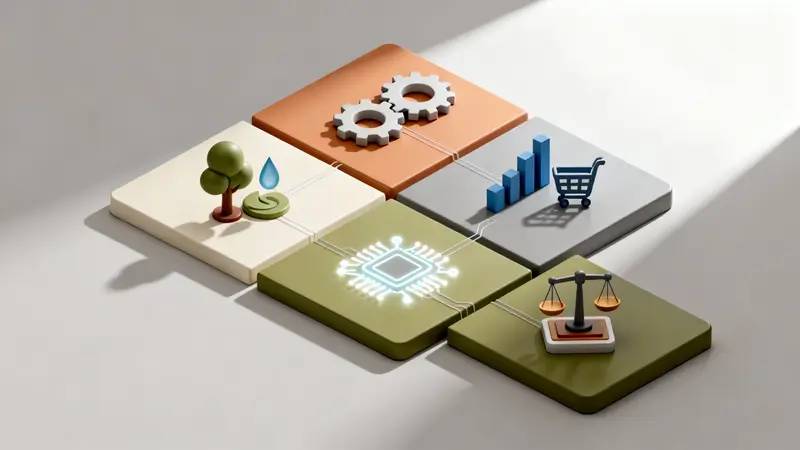
Understanding the fundamental **types of economic activities** is crucial for anyone looking to grasp how economies function, evolve, and create value. From the raw materials extracted from the earth to the high-level strategic decisions made in boardrooms, every action that involves producing, distributing, or consuming goods and services falls into distinct categories. This guide provides a comprehensive overview of the five sectors of economic activity: primary, secondary, tertiary, and the more recently defined quaternary and quinary sectors. Exploring these classifications not only fulfills educational curiosity but also provides investors and analysts with a framework for identifying market trends and opportunities.
What Are Economic Activities? A Simple Definition
An economic activity is any process that leads to the production of a good or the provision of a service, with the ultimate goal of satisfying human wants and needs. These activities form a chain, starting with the extraction of resources and ending with final consumption. The classification of these processes helps economists, governments, and businesses analyze the structure of an economy and measure its performance, such as the Gross Domestic Product (GDP).
The Importance of Classifying Economic Activities
Classifying the various **types of economic activities** serves several critical purposes:
- Economic Analysis: It allows for the measurement of each sector’s contribution to the national income and employment, revealing the economic structure of a country.
- Policy Making: Governments use this data to formulate policies that can stimulate growth in specific sectors, manage unemployment, and control inflation.
- Understanding Development: The dominance of a particular sector often indicates a country’s level of economic development. For example, a heavy reliance on the primary sector is typical of developing nations, while developed economies are dominated by the tertiary and quaternary sectors.
- Investment Strategy: For investors, understanding these sectors is a cornerstone of investment basics. It helps in identifying growth areas and diversifying portfolios based on sectoral trends.
Key Insight: The evolution of an economy is often marked by a shift in workforce and capital from the primary sector to the secondary, and eventually, to the tertiary and quaternary sectors.
Primary Economic Activities: Extracting Raw Materials
The primary sector is the foundation of all economic activity. It involves the extraction and harvesting of natural resources directly from the earth. These raw materials are the essential inputs for the secondary sector. This sector is most vital in less developed countries, where a significant portion of the population is engaged in these activities.
Definition of the Primary Sector
Primary economic activities are concerned with obtaining or providing raw materials for subsequent processing. This sector is characterized by its direct dependence on the natural environment. The value generated here is fundamental, but often less than the value added in subsequent stages of production.
Examples of Primary Economic Activities
The primary sector includes a range of essential industries. Here are some prominent examples of these **types of economic activities**:
- Agriculture: This is the most significant primary activity, involving the cultivation of crops (like wheat, rice, corn) and the rearing of livestock (cattle, poultry). It provides food, fibers, and other raw materials.
- Mining and Quarrying: This involves the extraction of valuable minerals and other geological materials from the Earth. Examples include mining for coal, iron ore, gold, and quarrying for stone and sand.
- Fishing: The harvesting of fish and other aquatic life from oceans, rivers, and lakes. It’s a critical source of food and livelihood for coastal communities worldwide.
- Forestry and Logging: This includes managing forests and felling trees to produce timber, pulp for paper, and other wood-based products.
- Oil and Gas Extraction: Drilling and pumping crude oil and natural gas from underground reserves, which are crucial energy sources for the global economy.
Secondary Economic Activities: Manufacturing and Processing
The secondary sector takes the raw materials harvested by the primary sector and transforms them into finished or semi-finished goods. This is the manufacturing and construction hub of the economy, where value is significantly added. The Industrial Revolution marked the rise of this sector, leading to mass production and urbanization.
Definition of the Secondary Sector
Secondary economic activities involve the processing, manufacturing, and construction that convert raw materials into more useful and valuable products. This sector encompasses a wide range of industries, from heavy manufacturing to food production.
Examples of Secondary Economic Activities
The following are clear **secondary sector examples** that illustrate the transformation process:
- Automobile Manufacturing: Steel (from iron ore), rubber, and plastics are assembled to create cars, trucks, and other vehicles.
- Construction: Using materials like steel, concrete (from stone and sand), and wood, this industry builds homes, roads, bridges, and commercial buildings.
- Textile Production: Raw cotton or wool (from the primary sector) is spun into thread, woven into fabric, and then manufactured into clothing and other textiles.
- Food Processing: Raw agricultural products are processed and packaged into consumer-ready foods, such as turning wheat into flour and then bread, or canning fruits and vegetables.
- Electronics Manufacturing: Assembling components, many of which are derived from mined minerals, to produce consumer electronics like smartphones, laptops, and televisions.
Tertiary Economic Activities: The Service Sector
The tertiary sector, also known as the service sector, does not produce tangible goods. Instead, it provides services to the general population and businesses. In most developed and developing economies, this sector is the largest contributor to GDP and employment. It represents a shift from producing things to doing things for people and other businesses.
Definition of the Tertiary Sector
The **tertiary service sector** involves the provision of intangible goods, or services. This includes a vast range of activities that facilitate commerce, provide entertainment, distribute goods, and offer professional expertise. The growth of this sector is a hallmark of a mature economy.
Examples of Tertiary Economic Activities
The tertiary sector is incredibly diverse. Here are key examples:
- Retail and Wholesale Trade: Selling goods directly to consumers (retail) or to other businesses (wholesale).
- Healthcare Services: Hospitals, clinics, doctors, and nurses providing medical care.
- Financial Services: This includes banking, insurance, and investment management. Companies like Ultima Markets operate within this crucial part of the economy, offering platforms for trading and investment.
- Transportation: Airlines, shipping companies, railways, and trucking services that move goods and people.
- Hospitality and Tourism: Hotels, restaurants, and travel agencies that cater to tourists and travelers.
- Education: Schools, colleges, and universities providing learning and training.
Recommended Reading
To delve deeper into market dynamics, particularly in the financial services sector, exploring effective trading strategies is essential. Learn more about the Best CFD Trading Strategies 2026: The Ultimate Guide to High Returns for advanced insights.
Beyond the Basics: Quaternary and Quinary Activities
As economies have become more complex and knowledge-based, the three-sector model has been expanded to include two additional **types of economic activities**. The quaternary and quinary sectors are specialized extensions of the tertiary sector, focusing on knowledge, information, and high-level decision-making.
The Quaternary Sector: Information and Knowledge
The quaternary sector is often called the knowledge economy. It is centered on information technology, research and development (R&D), and knowledge-based services. This sector requires a highly educated workforce and is a key driver of innovation.
- Definition: Activities involving the collection, processing, and dissemination of information, as well as research and development.
- Examples: Software development, data analysis, scientific research, financial consulting, and higher education. The development of advanced trading platforms like Ultima Markets MT5 is a prime example of a quaternary sector product.
The Quinary Sector: High-Level Decision Making
The quinary sector is the most specialized, representing the highest level of decision-making in an economy. Often referred to as ‘gold collar’ professions, these individuals and groups have significant influence on society and the economy.
- Definition: The creation, re-arrangement, and interpretation of new and existing ideas; data interpretation and the use and evaluation of new technologies. It includes top-level executives and officials.
- Examples: CEOs of major corporations, top government officials, heads of state, university presidents, and leading scientific researchers. Their decisions can shape entire industries and national policies.
Comparison of the Five Types of Economic Activities
To better visualize the distinctions, here is a comparative table of the five sectors:
| Sector | Core Function | Examples | Role in Economy |
|---|---|---|---|
| Primary | Extraction of Raw Materials | Farming, Mining, Fishing | Foundation of the economy |
| Secondary | Manufacturing & Processing | Car Manufacturing, Construction | Value addition and production |
| Tertiary | Providing Services | Retail, Healthcare, Banking | Distribution and support |
| Quaternary | Knowledge & Information | IT Services, R&D, Consulting | Innovation and efficiency driver |
| Quinary | High-Level Decisions | CEO, Government Leaders | Strategic direction |
Conclusion
The classification of the five **types of economic activities**—primary, secondary, tertiary, quaternary, and quinary—provides an essential framework for understanding the complex structure of modern economies. This model illustrates the journey of value creation, from raw material extraction to high-level strategic planning. For citizens, policymakers, and especially investors, recognizing the roles and interdependencies of these sectors is fundamental to making informed decisions. As technology and globalization continue to reshape our world, the lines between these sectors may blur, but their core functions will remain the pillars of economic analysis and strategy. A solid grasp of these concepts is indispensable for navigating the opportunities and challenges of the global marketplace. Trustworthy financial partners, as highlighted in Ultima Markets Reviews, can be instrumental in this journey.
Frequently Asked Questions (FAQ)
1. What are the 3 main types of economic activities?
The three main, or traditional, types of economic activities are Primary, Secondary, and Tertiary. The Primary sector involves extracting raw materials (e.g., farming, mining). The Secondary sector focuses on manufacturing and processing these materials (e.g., car production, construction). The Tertiary sector provides services (e.g., retail, banking, healthcare).
2. Is teaching a tertiary or quaternary economic activity?
This is a great question that shows the evolving nature of these classifications. Traditionally, teaching (especially at the K-12 level) is considered a tertiary activity as it is a service provided to the community. However, higher education, particularly university-level teaching and research, is often classified as a quaternary activity because it involves the creation and dissemination of specialized knowledge and drives innovation.
3. How do the different types of economic activities relate to each other?
The sectors are highly interdependent and form a production chain. The Primary sector supplies raw materials to the Secondary sector. The Secondary sector processes these materials into goods, which are then distributed and sold by the Tertiary sector. The Tertiary sector also provides crucial services (like finance, transport, and marketing) to both the primary and secondary sectors. The Quaternary and Quinary sectors support all other sectors by providing innovation, research, and strategic direction, helping them to become more efficient and competitive.
4. Which economic sector is the most important for a developed country?
In most developed countries, the Tertiary (service) and Quaternary (knowledge) sectors are the most important. They typically contribute the largest share to the country’s GDP and employ the majority of the workforce. This shift from manufacturing to services and information is a key indicator of economic maturity and high income levels.
5. Can a single company operate in multiple economic sectors?
Yes, many large, vertically integrated companies operate across multiple sectors. For example, a large oil company might be involved in oil extraction (Primary), refining it into gasoline (Secondary), and operating its own gas stations to sell the fuel (Tertiary). Similarly, a tech company might manufacture hardware (Secondary) and also develop the software and cloud services that run on it (Quaternary).
